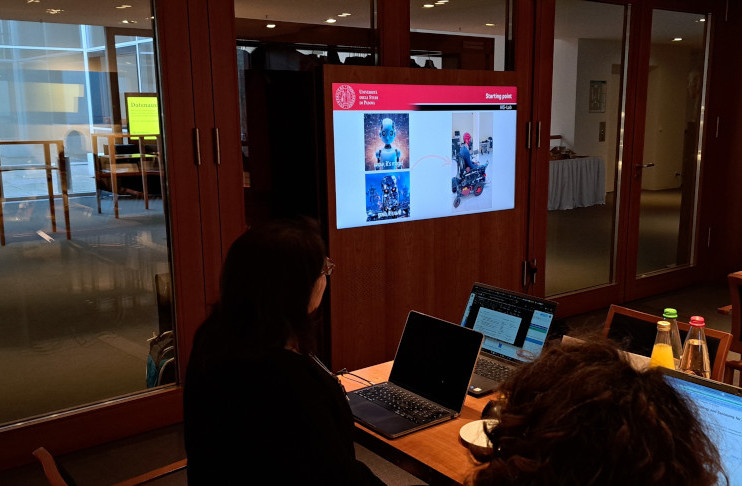
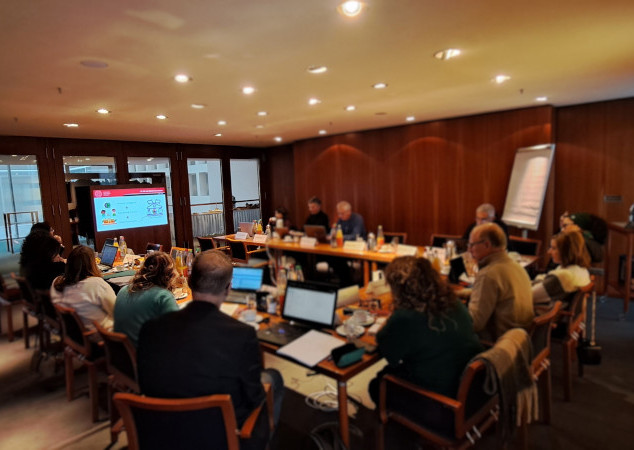
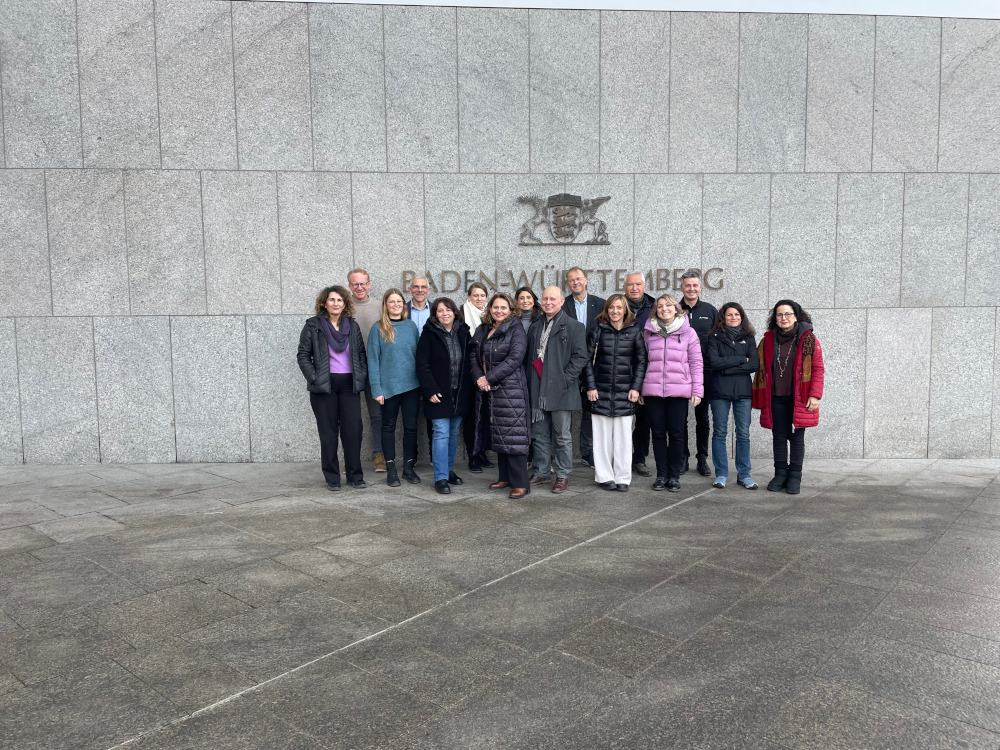
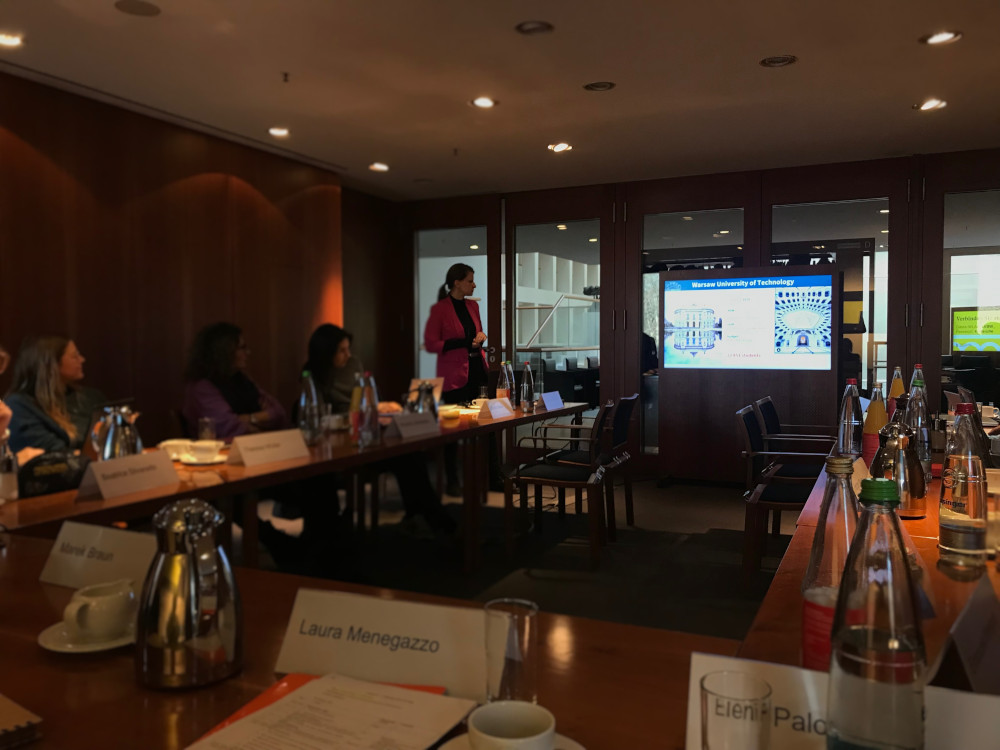
The project’s kick-off meeting took place on January 20-21 in Berlin. We had the opportunity to meet in person for the first time. We shared our experiences regarding AI in schools, discussed the project details, and listened to an interesting lecture on the basics of Artificial Intelligence, Language Models, and Large Language Models. We are ready to start working!
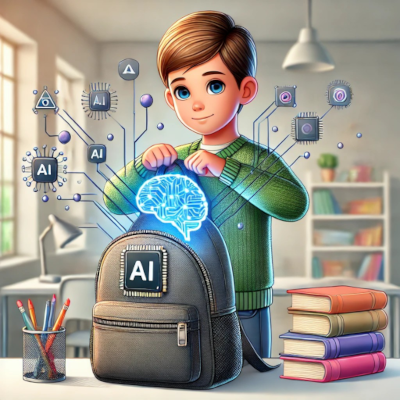
In the face of the growing importance of technology in everyday life, education must keep pace with the dynamic development of artificial intelligence (AI). This project aims to integrate AI tools into the curriculum, particularly in subjects related to programming, mathematics, data analysis, and other technological fields. The goal is not only to use AI as a learning aid but also to teach students how to consciously and effectively utilize these technologies in practice.
The main objectives of the project are:
Through this project, students will not only gain knowledge about AI but also learn how to effectively harness its potential in practice while remaining aware of its limitations and risks. The program aims to develop future-oriented competencies, critical thinking, and prepare young people for careers in a world where AI plays an increasingly significant role.
Development of the AI2Schools Curriculum Handbook for secondary schools, introducing AI literacy within STEM practices & STEAM approach
Development of the AI2Schools Project Guidebook with 5 AI-related hands-on and interdisciplinary projects to support and exemplify the implementation of the curriculum
Organisation of blended training courses for teachers to enable them to implement the curriculum in their classes
Running pilots in school classes & making teacher- and student-based evaluations
AI Curriculum Handbook
The AI curriculum Handbook aims at helping school teachers in comprehending AI and introducing AI literacy to their students through a STEM context and STEAM learning approach. STEM context (and STEAM approach) is considered a privileged field to introduce AI because it combines various scientific disciplines, which enable students to explore real-world problems through a hands-on interdisciplinary approach. The curriculum aims to improve teachers’ digital skills and competences and enhance their confidence in using AI in the teaching and learning process by introducing them to core mechanisms of AI, such as data structures, algorithms, and Machine Learning, and demonstrating their implementation in real-world scenarios.
The AI-Body Beats
The AI-Body Beats project introduces students to core AI concepts through hands-on engaging STEAM activities using the BBC micro:bit V2 with the micro:bit CreateAI tool and MakeCode editor. Students collect and curate motion data with the micro:bit’s accelerometer to train machine learning models recognizing physical gestures, which they then program to generate sounds or visuals. At a second level, they build an interactive virtual dance coach game that requires more advanced programming skills. The project integrates AI concepts like perception, reasoning, and learning while promoting creativity, collaboration, and problem-solving. It connects AI literacy with physical activity and real-world applications, aiming to engage learners with diverse learning styles—including those less interested in STEM—and to support Sustainable Development Goals for good health and quality education.
Visual Lab
Visual Lab engages students in pairs to co-design mini web apps in HTML+JS that make visible the core concepts of mathematics, probability, and statistics. The apps are intended not only to simulate processes but also to illustrate the mathematical rules, formulas, and laws (e.g., combinatorics, distributions, the Law of Large Numbers) that underlie problem-solving. Students co-design with a chatbot using a constructionist approach and record outcomes on a shared index page.
This recording features the second workshop on using artificial intelligence in education and is designed as a training resource for teachers. The session showcases the “AI Body Beats” project by the @Edumotiva team — a hands-on learning experience that builds AI literacy through STEAM and creativity. In this video, you will learn:
The recording of a workshop on the use of artificial intelligence in education has been prepared as a training resource for teachers.
In this 30-minute video, you will:
AI Tools and Curricula – WP2 Report (AI2Schools)
This report explores how artificial intelligence can support STEM education in schools across Germany, Greece, Italy, and Poland. It provides an overview of national curricula, examples of AI tools for classroom use, and a summary of recent research. The document highlights both the challenges and the potential of AI in education – a must-read for those interested in shaping future skills.
Gemeinschaftsschu le Leutkirch Germany Leutkirch im Allgäu
e-mail: AI2Schools@fizyka.pw.edu.pl
Warsaw Univ. of Technology
Faculty of Physics
Koszykowa 75 Str., 00-662 Warszawa
Project title: “AI in STEAM Education to develop a critical understanding of AI and prepare learners on AI literacy”,
project number: 2024-1-PL01-KA220-SCH-000245655, Erasmus+.
The European Commission’s support to produce this publication does not constitute an endorsement of the contents, which reflect the views only of the authors, and the Commission cannot be held responsible for any use which may be made of the information contained therein.”